Rubble and old furniture, ready to go
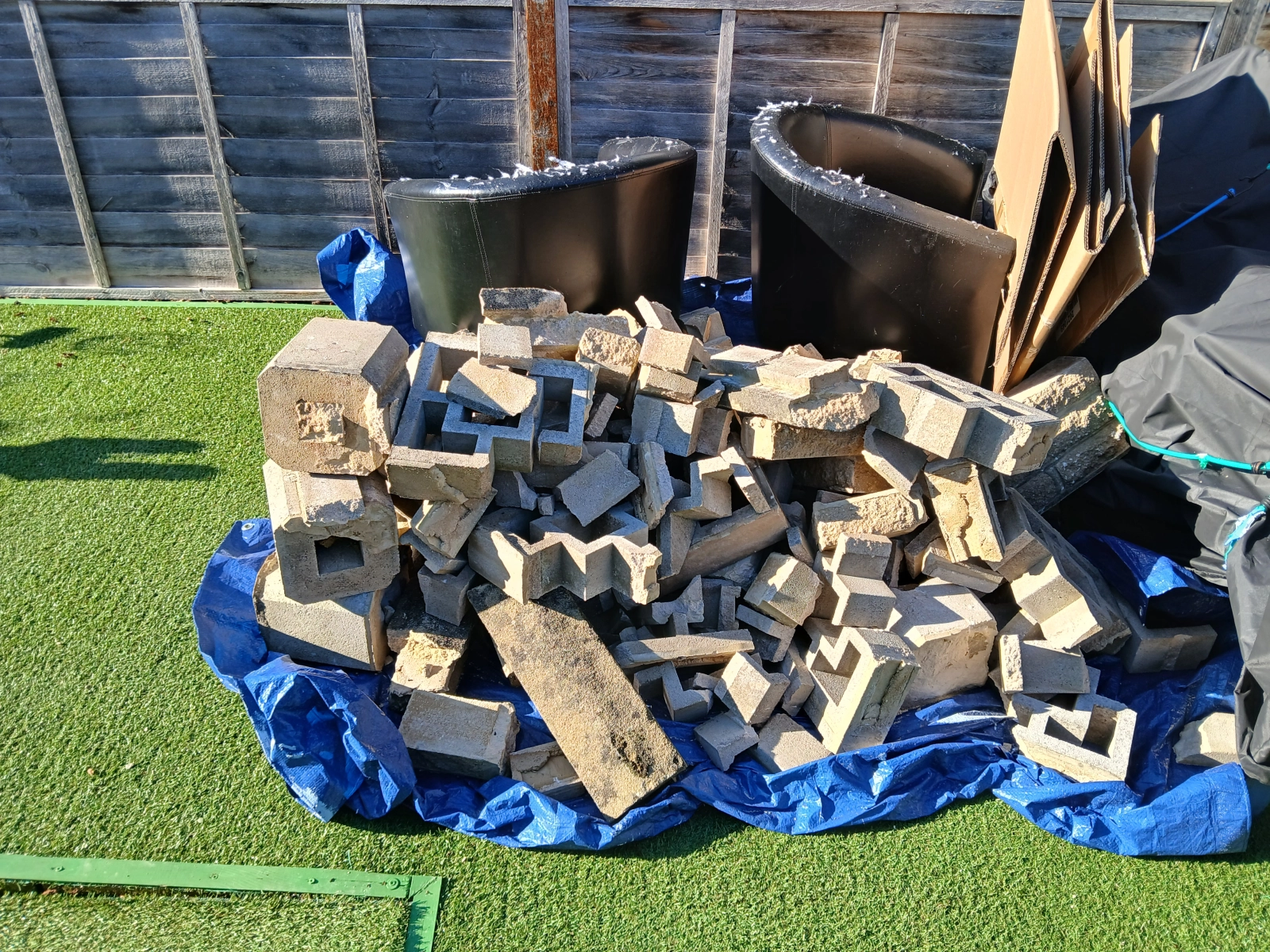
Garden projects have a habit of leaving behind the heaviest waste of all. Take down an old wall or raised bed and you're left with a pile of concrete that's far too heavy for a car boot and too bulky for any bin. Add a couple of worn-out chairs and some packaging, and the garden quickly starts to look like a building site. That's the situation for Steve in Chichester, who has a mixed pile of rubble, furniture and cardboard to clear from outside his property.
The job
Steve needs three types of waste collected:
- Around 40 broken concrete blocks
- Two black faux-leather tub armchairs with damaged upholstery
- Several sheets of flattened cardboard
Everything is outside at ground level, gathered together on a tarpaulin, and nothing needs dismantling. The real challenge is the weight. Concrete blocks are dense and heavy, broken pieces have rough, sharp edges, and 40 of them add up to a load that would take many car trips and a lot of lifting. The armchairs are lighter but bulky and awkward to fit into a vehicle alongside rubble.
Rather than spend days ferrying concrete to the tip, Steve requested a no-obligation quote through Rubbish.com and was matched with a local waste carrier. For a load this heavy, a man-and-van rubbish removal service makes far more sense than a car: the van can carry the full weight in one go, and the team knows how to lift and stack broken concrete without risking injury.
How the collection will go
Once the job is booked, our local partner will load the concrete blocks, armchairs and cardboard onto the van from Steve's garden. With everything at ground level and already grouped in one place, the collection is expected to be completed smoothly in a single visit.
The removal is quoted at £120, saving Steve the heavy lifting and the time it would take to move everything himself.
Where rubble, chairs and cardboard go
Each part of this load takes a different route. Broken concrete is an inert material, so it can usually be crushed and recycled as aggregate for use in new building and landscaping projects. Cardboard is one of the most widely recycled materials there is.
Upholstered seating is handled more carefully. In England, old armchairs and sofas are assumed to contain persistent organic pollutants unless shown otherwise, so they need to be kept apart from other waste and sent for incineration rather than landfill.
Taking rubble to the tip yourself also has limits. West Sussex recycling centres accept up to 200kg of building and demolition materials per visit, roughly eight full rubble bags, as explained on West Sussex County Council's guidance for building and demolition waste. Forty concrete blocks would easily go over that, meaning several separate trips.
Whoever takes your waste away, it's worth checking they're a registered waste carrier. Householders have a duty of care for their waste, and using an authorised collector helps make sure it isn't fly-tipped.
Planning a garden clearance in Chichester?
If you have rubble, old garden furniture or other bulky waste to clear in Chichester or the wider PO20 area, booking one collection can save you a lot of time and effort.
A few tips to help it go smoothly:
- Give a rough count. Knowing how many blocks or bags of rubble there are helps the carrier plan for the weight.
- Keep heavy waste together. A single pile, ideally on a tarpaulin as Steve has done, makes loading faster and protects your lawn.
- Flatten cardboard. Flattened boxes take up far less van space than whole ones.
- Mention upholstered furniture. Chairs and sofas need separate handling, so include them in your quote request.
Steve's quote of £120, provided by local waste carrier
J and L Waste Solutions, shows how even a heavy garden clearance can be handled quickly and responsibly in one visit.