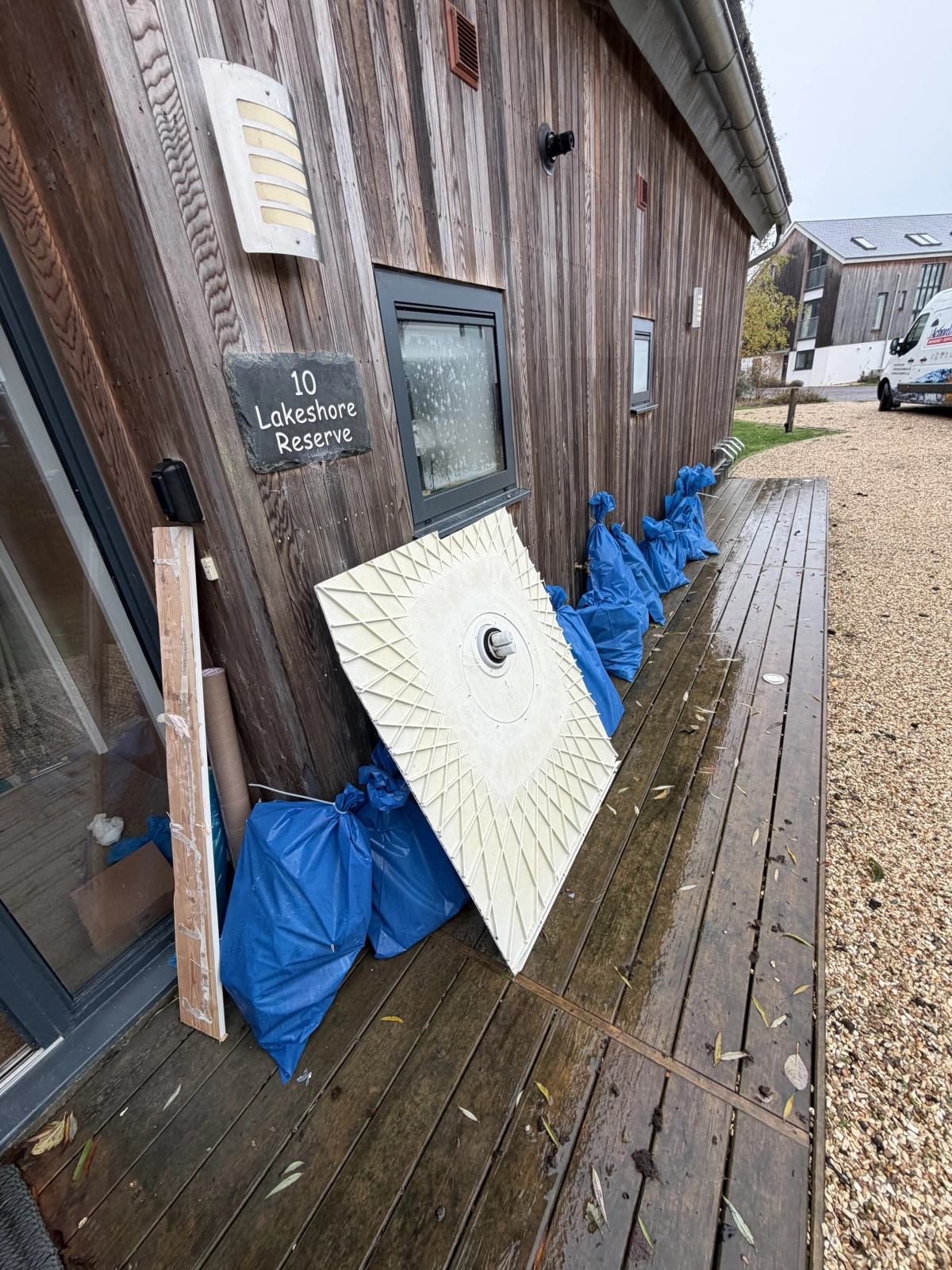
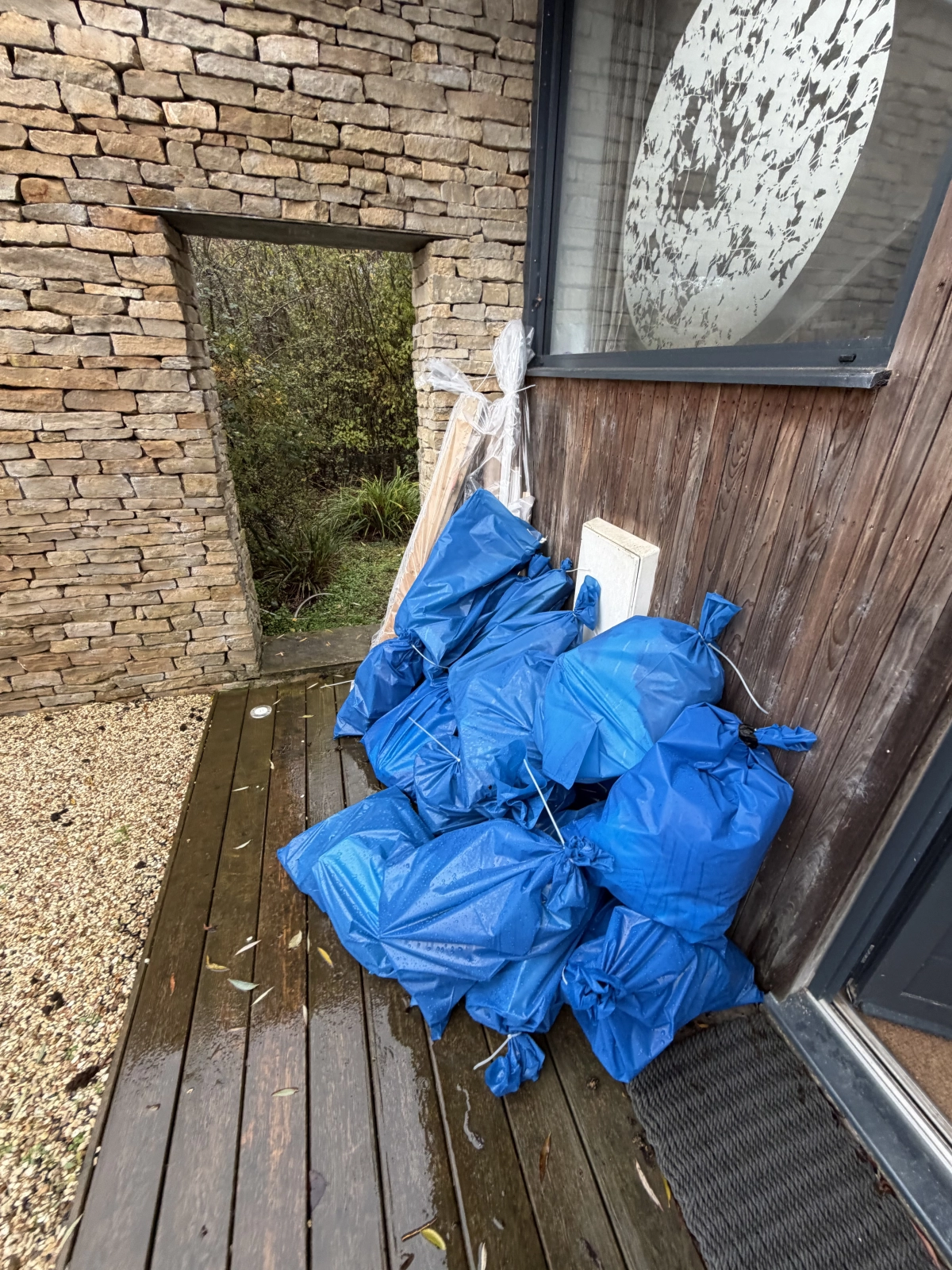
Fifty bags later, the bathroom's finished
Anyone who has ripped out a bathroom knows how quickly the debris adds up. Old tiles, broken plaster and chunks of screed go into one rubble bag, then another, and before long there's a wall of them lined up outside. That's where Alex in Cirencester has ended up: 50 bags of building waste and the old shower tray, all waiting to go.
What Alex needs taking away
- 50 blue rubble bags filled with building debris
- 1 old shower tray
It's a short list, but don't let that fool you. A full rubble bag can easily weigh 20kg or more, so 50 of them could add up to around a tonne of material. The shower tray is the awkward one: large, flat and, depending on what it's made of, surprisingly heavy. Everything is outside on the ground floor and nothing needs taking apart, which helps, but this is still a job that needs a proper vehicle and two pairs of hands.
Alex wanted it cleared quickly, so rather than hiring a trailer or spending a week on tip runs, they requested a no-obligation quote through Rubbish.com and were matched with a local waste carrier. A man-and-van rubbish removal service suits heavy builders' waste like this, with a van rated for the weight and a crew who'll do all the lifting.
Planning the collection
Once Alex confirms the booking, our local partner aims to get there as soon as they can. The crew will load the rubble bags evenly across the van floor to keep the weight balanced, then slide the shower tray in last. Because everything is in one place at ground level, a single visit should cover it.
The price quoted for the job is £250. That covers the labour, the transport and the disposal fees, so Alex won't need to make a single trip.
Is it cheaper to take rubble to the tip yourself?
Sometimes, but only in small amounts. Gloucestershire County Council has been reviewing how its recycling centres handle excess DIY waste, keeping a free household allowance and planning to charge for anything above it, as set out in Gloucestershire County Council's update on DIY waste at recycling centres. Fifty bags is well beyond what most households could bring in a few visits, and that's before you count the fuel, the time and the strain of lifting each bag in and out of a car.
What happens to the rubble and the tray?
Most rubble is far from useless. Broken brick, concrete, tile and stone are inert materials that can be crushed down and reused as aggregate for roads, paths and new building work. Soil is usually screened and reused too. A shower tray is handled according to its material: stone resin and ceramic trays go with other inert waste, while acrylic or plastic trays are sorted separately and recycled where possible.
As always, it's worth making sure your collector is a registered waste carrier. As a householder, you have a duty of care to make sure your waste ends up in the right hands and not fly-tipped down a country lane.
Before your rubble collection
Got builders' waste to shift in Cirencester or anywhere in the GL7 area? These pointers will help the day go smoothly:
- Don't overfill the bags. Half to two-thirds full is plenty for rubble. Overloaded bags can split when lifted.
- Count them up. Telling the carrier how many bags you have makes it much easier to quote accurately.
- Keep plasterboard separate. It needs different handling from general rubble, so bag it on its own if you can.
- Leave a clear route. Make sure the van can park close by and there's a clear path to the bags.
Tom Norman Rubbish & Waste Clearance Ltd provided Alex's £250 quote.