Clearing leftover DIY waste after a home improvement project
The satisfying part of a home improvement project is seeing the finished floor or wall. The less satisfying part is what's left behind: offcuts, broken tiles, spare timber, empty tubs and packaging, all piled up in whatever space was free. That was where Silvia in Harrow found herself, with a ground-floor storage area full of leftover DIY waste and no easy way to shift it.
The job
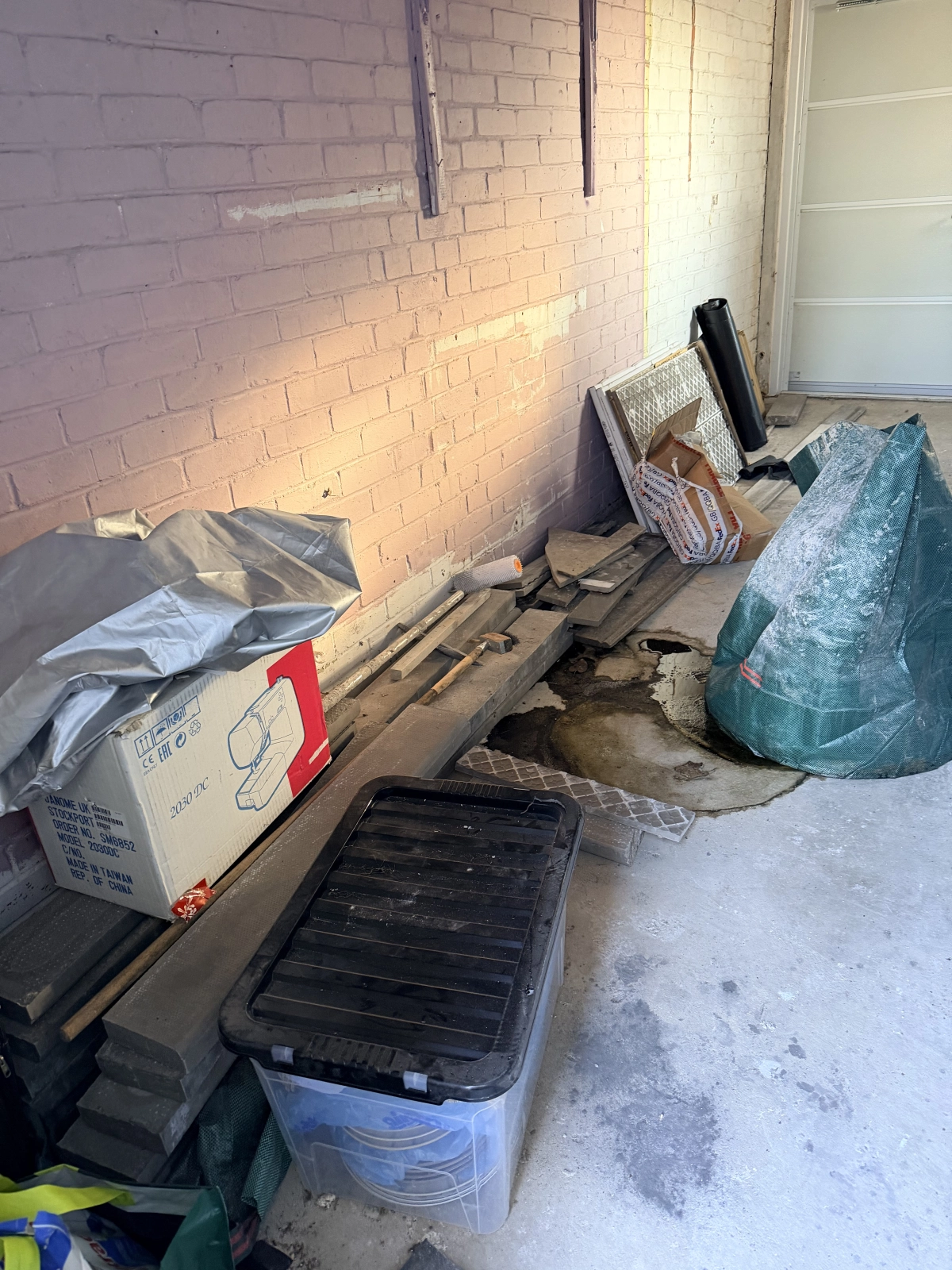
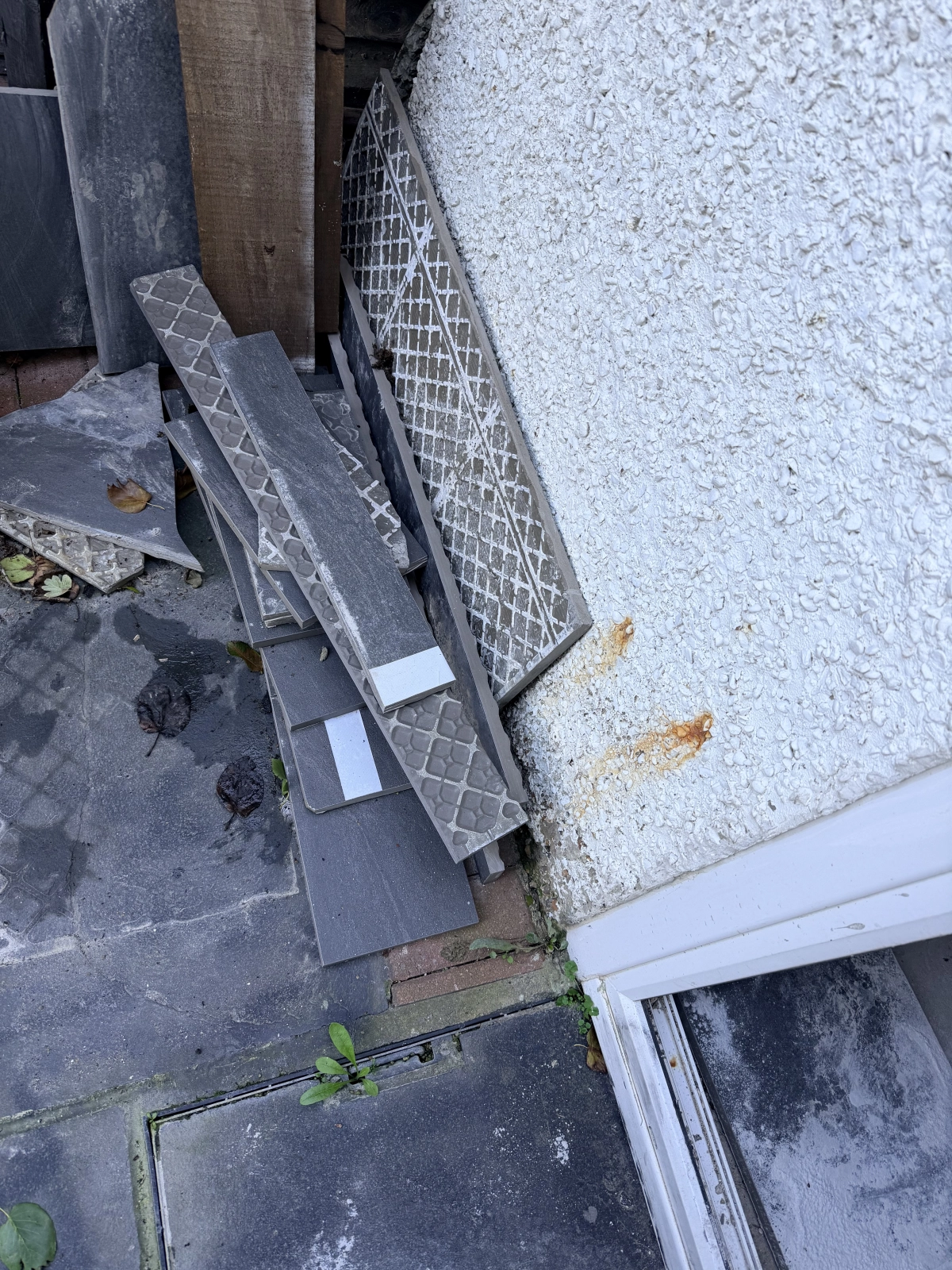
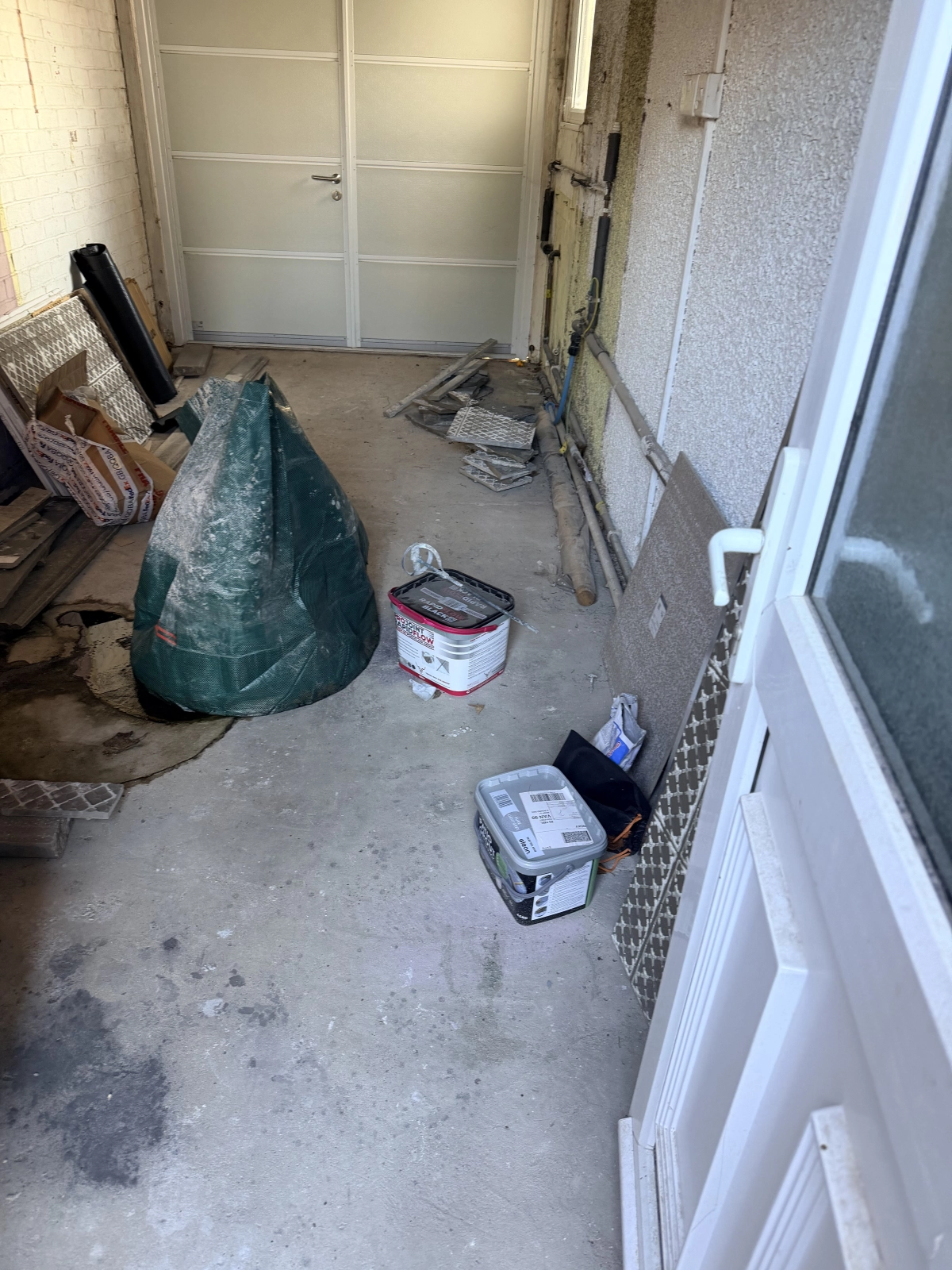
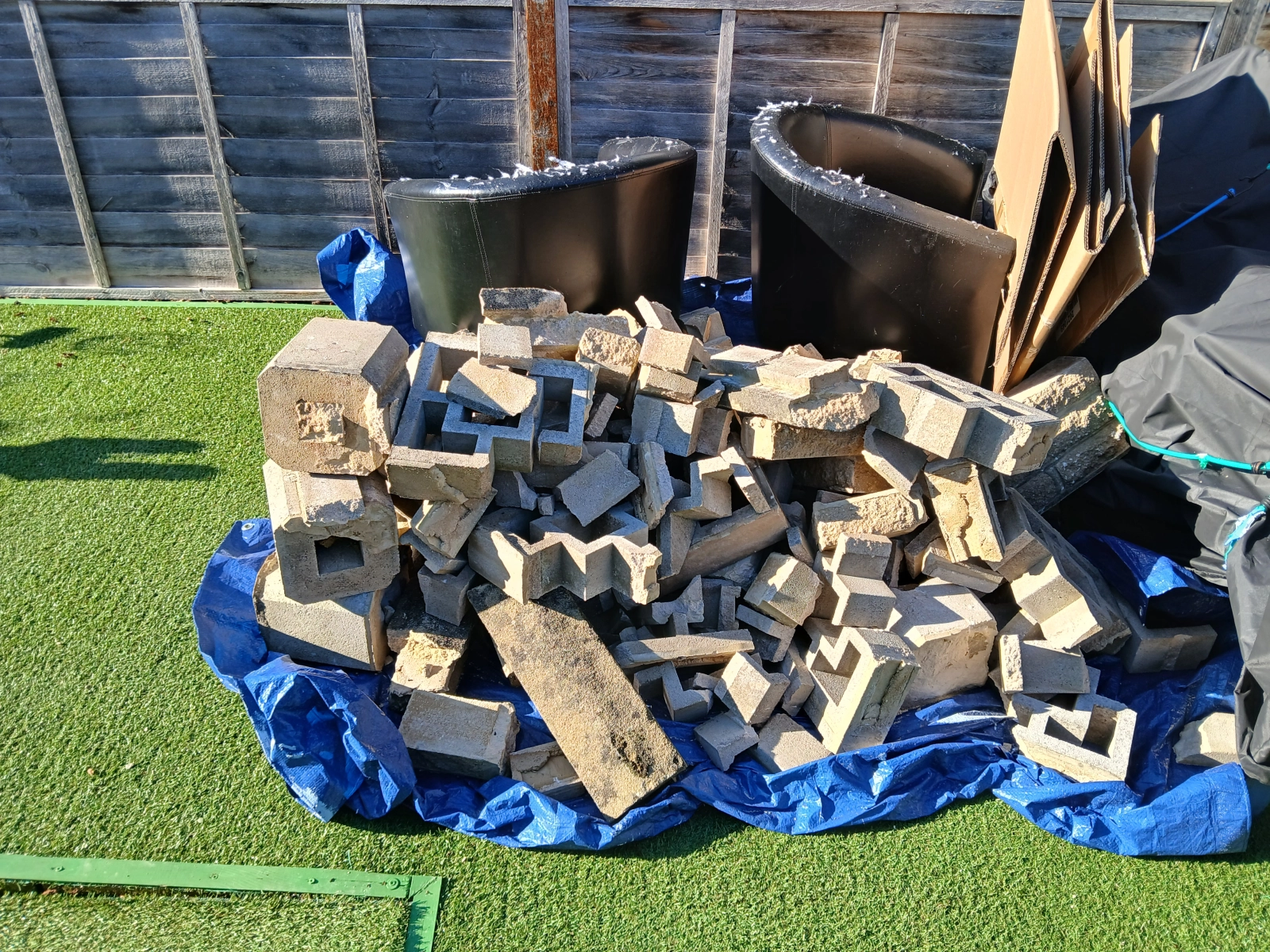
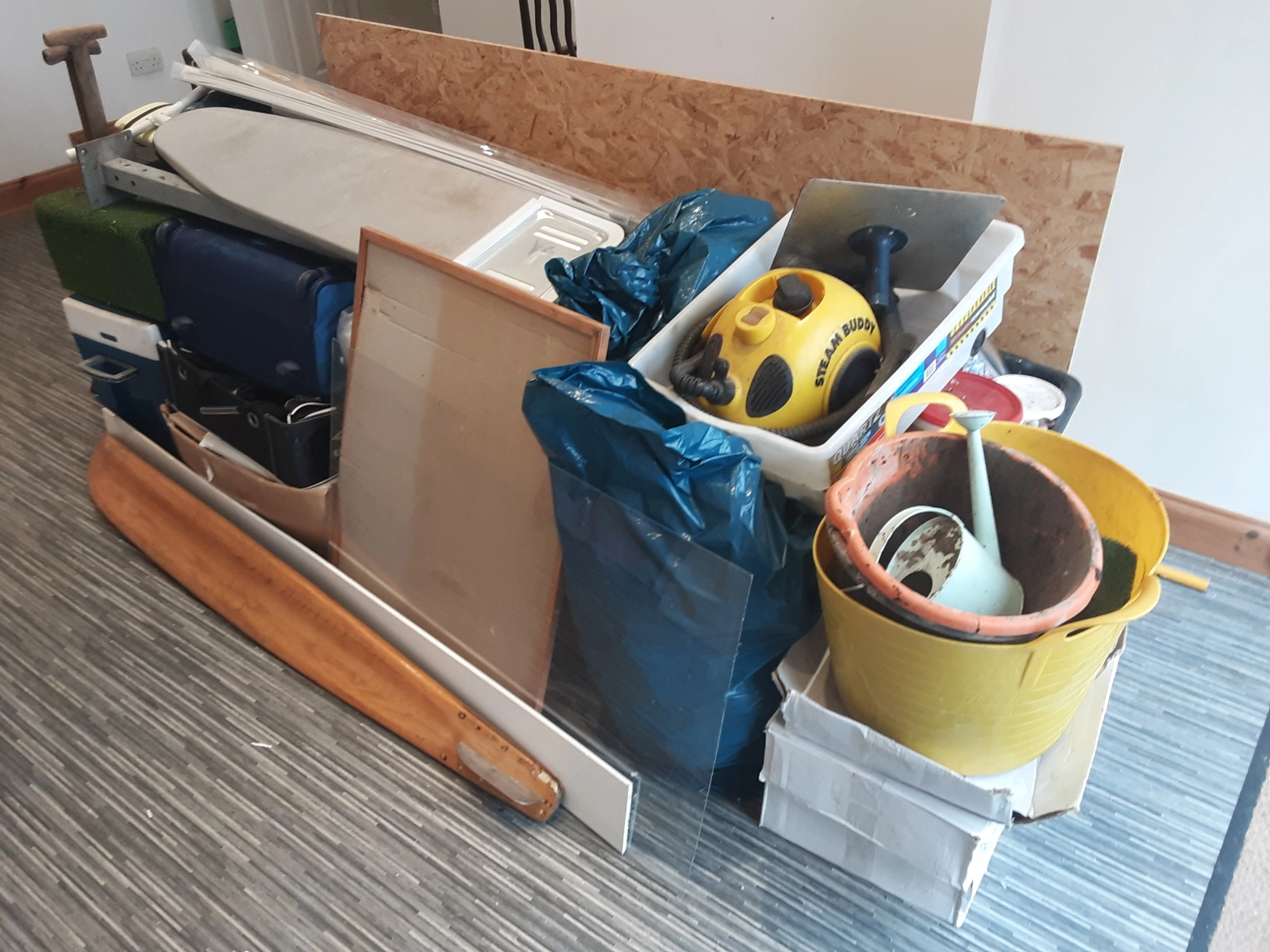
The load was a real mix of materials:
- Piles of broken floor and wall tiles
- Several wooden beams and planks
- A large green bag filled with debris
- A plastic storage box with a black lid
- Cardboard boxes and packaging
- Plastic pipes
- Two tubs left over from the tiling work
- A roll of black material, likely vinyl or membrane
- Pieces of mesh panelling
Everything was inside on the ground floor, so there were no stairs to deal with and nothing needed dismantling. The difficulty was the weight and the variety. Tiles are surprisingly heavy in bulk, broken edges can be sharp, and long timber and pipes are awkward to fit into a car. Mixed loads like this also have to be separated at the tip, which turns a single trip into a long afternoon.
Rather than spend her weekends on tip runs, Silvia requested a no-obligation quote through Rubbish.com for a local rubbish removal and was matched with a waste carrier who could collect within the next few days.
How the collection will go
Our local partner will carefully remove all the DIY waste from inside Silvia’s property and load it onto the van. This will include heavy tile offcuts, a debris-filled green bag, timber, pipes and rolled materials.
The entire clearance is expected to be completed in a single visit for £160, leaving Silvia’s space clear and ready to use again.
Where DIY waste goes
Waste from home improvement projects doesn't belong in household bins, and recycling centres often treat it differently from everyday rubbish. In Harrow, for example, the council's recycling centre requires visits to be booked in advance and limits how much rubble and hardcore residents can bring in one go, as set out on Harrow Council's recycling centre page. For a big pile of broken tiles, that can mean several separate trips.
Once collected, much of this kind of waste can be recovered. Tiles and other inert materials are often crushed for use as aggregate, timber can be chipped and recycled, cardboard is widely recyclable, and plastics are sorted where the material allows. Anything that can't be recycled is disposed of at a licensed facility.
As with any rubbish removal, it's worth making sure your collector is a registered waste carrier. Householders have a duty of care for their waste, and using an authorised carrier helps keep it out of the hands of fly-tippers.
Need rubbish removal in Harrow?
If you've finished a renovation, tiling job or garage clear-out in Harrow or the wider HA2 area, booking a single man and van rubbish removal is often quicker and easier than repeated trips to the tip.
A few tips to help it go smoothly:
- Bag small and sharp pieces. Broken tiles and offcuts are safer and faster to load when they're in strong rubble bags.
- Gather everything in one spot. Keeping waste together near the exit helps the team work quickly.
- Mention heavy materials. Tiles, rubble and timber affect the load weight, so include them when you ask for a quote.
- Separate anything you want to keep. Spare tiles or materials you might reuse should be set aside before the team arrives.
Silvia's clearance shows how a mixed pile of DIY leftovers can be dealt with quickly and responsibly in one visit.